
Cherokee County’s First Power Plant
By Bruce Baker
The distribution of electrical power is complicated in the State of Georgia, in part because there are two distinct ownership models in play. EMCs, or Electric Membership Cooperatives, are nonprofit, member-owned cooperatives, and they service rural and small-town communities. Their territories do not follow county lines, and as such, at least three different EMCs serve portions of Cherokee County: Amicalola EMC in the northern portion, Cobb EMC in the Southwestern Portion, and Sawnee EMC in much of the Central and eastern portion. Territorial boundaries, for the most part, result in no direct competition between them. Urban and Suburban centers are served by Georgia Power, a for-profit utility. These entities operate over a shared infrastructure, and coordinate efforts to maintain and repair the grid to maximize reliability and efficiency.
As early as 1884, the Georgia Electric Light Company was supplying power for lighting and electric rail transportation to downtown Atlanta. This company was the forerunner of the company we know today as Georgia Power. Supplying electricity to rural locations was much more costly, happened slowly, and typically was done through rural electric cooperatives rather than large, for-profit utility companies. People in unserved areas came together and formed nonprofits called EMCs, pooling resources to bring electrical service to its members.
Oddly enough, the first electrical power supplied in Cherokee County was not supplied by either Georgia Power or an EMC. It is the story of a family and a company that simply got tired of waiting for it to arrive and decided to take matters into their own hands. The first electrical power service wouldn’t come to the county seat of Canton; rather, it would come to a town only ¼ of its size at the time: Ball Ground.
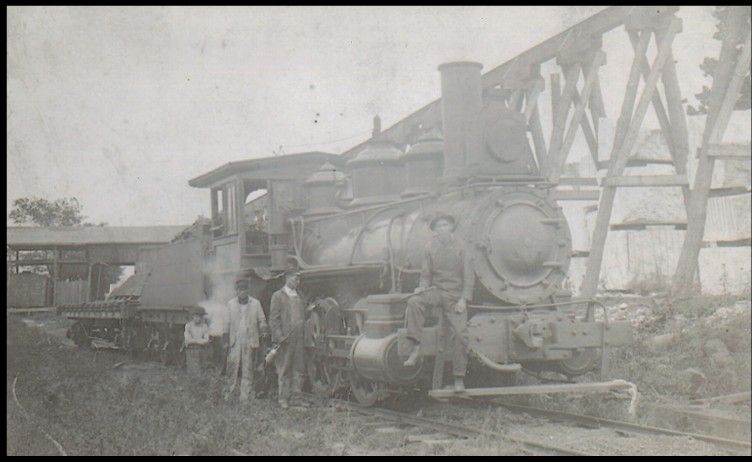
Alfred Webb Roberts founded and operated the Roberts Marble Company until his passing in 1918.After he passed, the Roberts family continued operating, with his 35-year-old son Jud Brown Roberts taking the helm. Another son, 31-year-old Augustus Paul Roberts, was also actively involved in running the business, whose core business was the manufacture of memorials and headstones of marble and granite, both of which could be sourced nearby. The finishing of stone was the primary business in the town at the time, and Roberts was one of three such companies doing so. This work is energy-intensive, and machines powered by electricity would significantly improve productivity.
Right: Locomotive at the Roberts Marble Company.


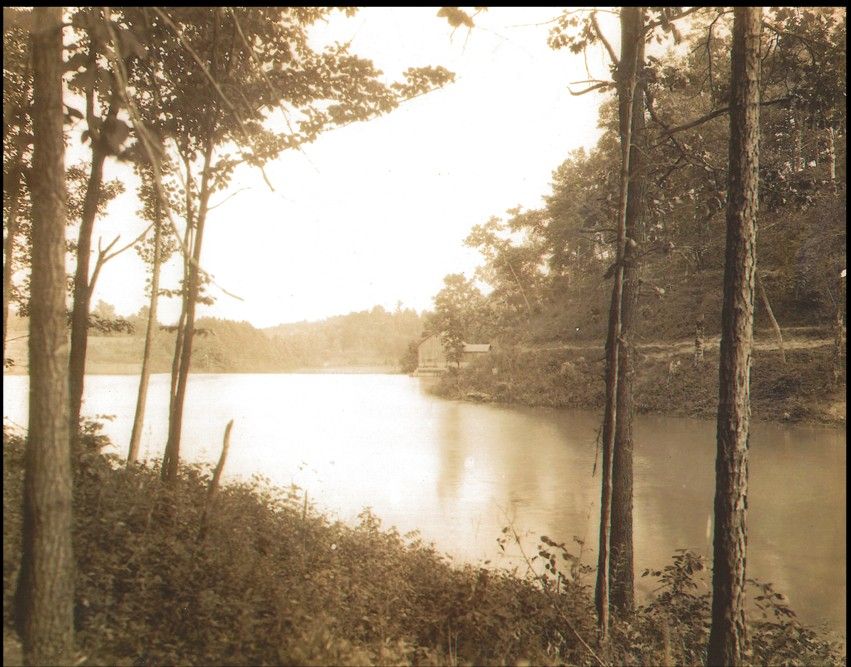
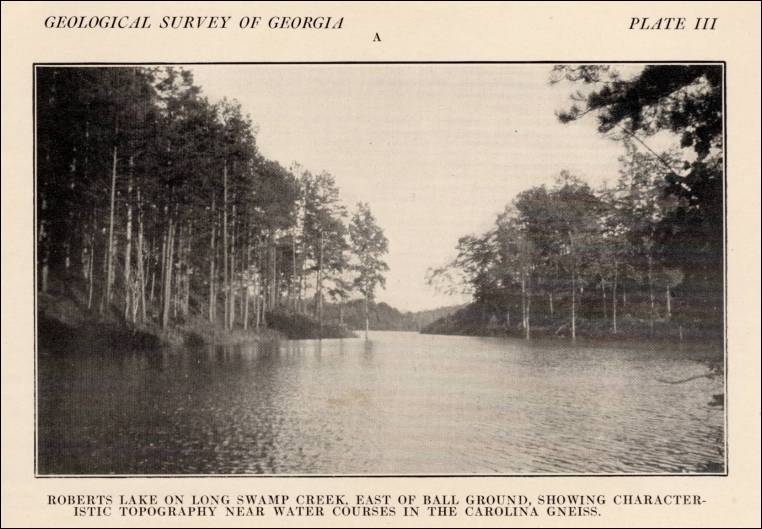
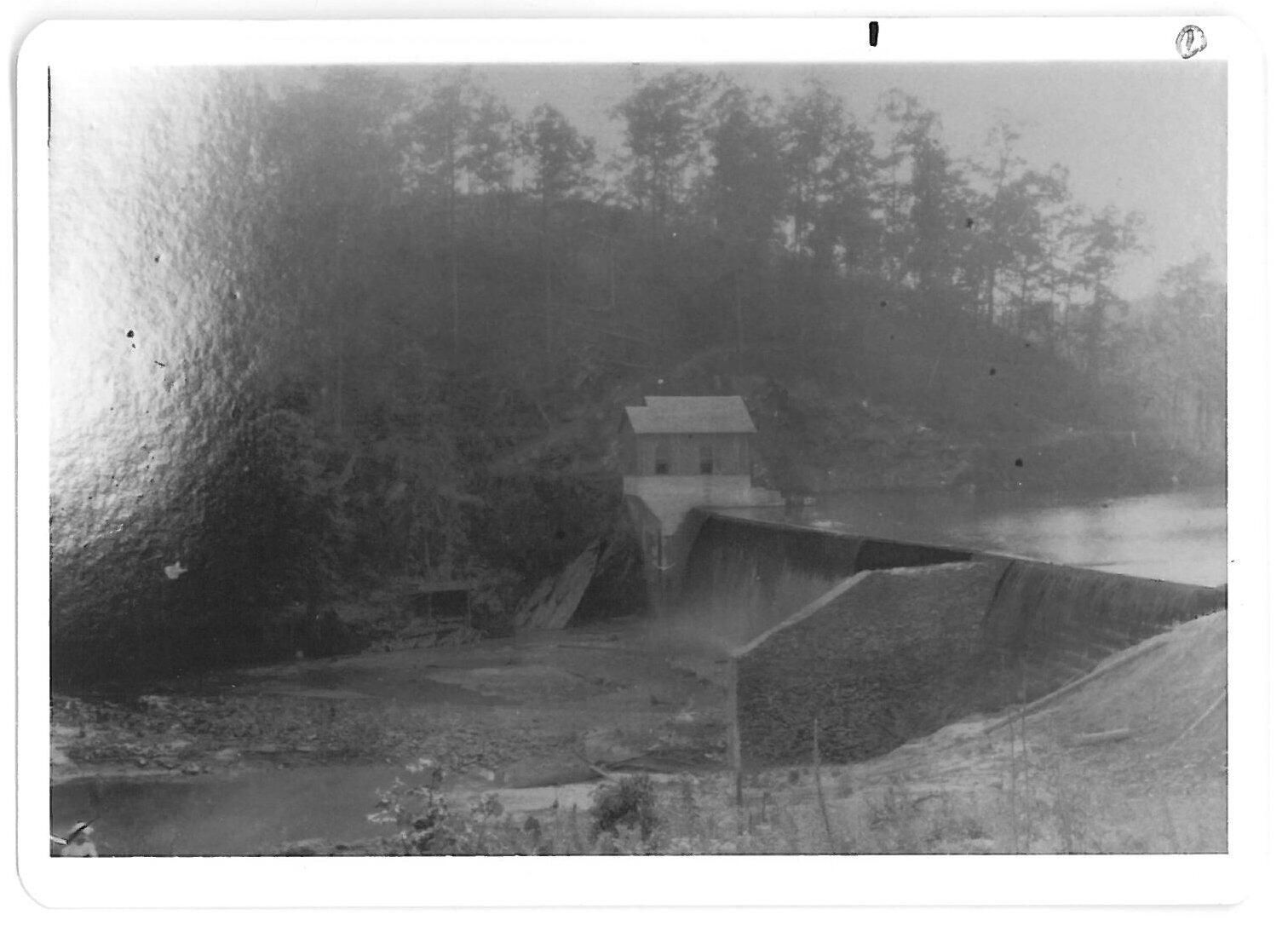
And so, on May 5, 1923, Mayor Anderson of Ball Ground presented a franchise ordinance to the city council from J. B. Roberts requesting authority to construct and maintain a power plant to furnish Ball Ground with electric energy. In the proposal he was also given authority to construct a gas plant to furnish gas for heating and lighting. No gas plant was ever actually constructed, but once given the authority to do so, under the direction of Paul Roberts, a wooden dam was constructed across Long Swamp Creek, resulting in the creation of a 65-acre lake, called Roberts Lake. Adjacent to the dam itself they erected a concrete structure which incorporated stones from the creek itself. This would be the power plant, which housed the turbine. Before long, the dam began producing electric power. It would operate for over a decade, to the satisfaction of everyone in Ball Ground.
Left: The lake at Roberts Dam.
But its days were numbered, as the predecessor of Georgia Power was expanding its service as quickly as it profitably could. By 1925, The Georgia Electric Light Company was installing streetlights and supplying electricity in Woodstock, with an eye towards extending its reach to the largest city in the county, Canton. It wouldn’t stop there; by 1928 Georgia Power acquired the Roberts Dam from the family, and shortly thereafter the dam ceased to operate. In contrast to the Roberts Dam and Power Company, initial relations between the city of Ball Ground and Georgia Power were less than cordial. The minutes of the October 29, 1928, town council meeting state that they were cited for violation of their franchise agreement and their street lighting contract.
There is some discrepancy regarding the specific date it happened, but Georgia Power dismantled the dam and the power station soon thereafter. Theories abound as to why they did so. Some say the power plant was inefficient by modern standards and would’ve cost too much to upgrade. Others contend that the perceived longevity and safety of a wooden dam consigned it by design to be somewhat short-lived. Then there are those who believe the acquisition and quick closure was to simply eliminate competition.
If the latter was the case, history says it wasn’t all that successful. Perhaps seeing what the Roberts Company had accomplished for Ball Ground, localities began to ask whether or not they could band together to bring electricity into their communities. And in May of 1936, the U.S. Congress passed the landmark New Deal law known as the Rural Electrification Act, which provided low-interest loans to cooperatives to build power plants and distribution lines. And before the year was out, four EMCs had already organized and been chartered in Georgia, including the North Georgia EMC. By 2016, the number had swelled to 41 individual co-ops, supplying electricity to almost ¾ of the state’s total land area.
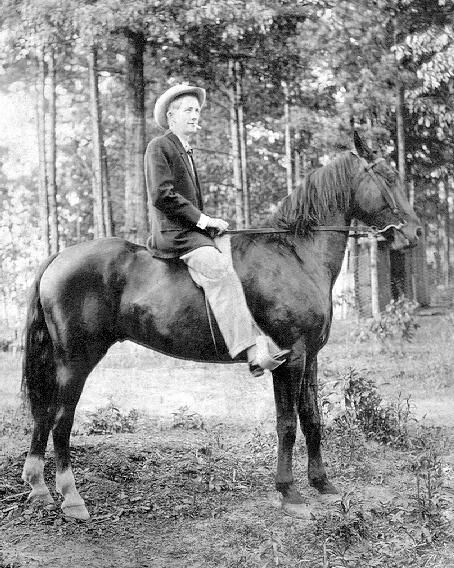
Pictured below: Another view of Roberts Lake on Long Swamp Creek and Jud Roberts.