



R.T. Jones: Three Years Turns into Six Decades
by Bruce Baker
Last May we issued an article on R. T. Jones, Sr., that featured his early years and ended with his arrival in Canton via train with his wife Susie and infant son. Let’s pick up where it ended.
R. T. arrived in Canton, which had only around 300 residents, convinced by his wife’s Uncle Maddox that it was poised for growth now that the new railroad was operational. His three-year plan: find a business that could capitalize on this growth, build it, and three years later after it was well-established, sell it for a tidy profit and move on. And so, in 1879 Jones opened a supply store on the town square, while living in a house sitting on the back of the same lot. Both were rented, in keeping with his short-term plan. He poured his life’s savings into stocking his store with dry goods, shoes and boots, and provisions. The gambit paid off, as Maddox had been right; Canton grew from 363 people in the 1880 census, to 659 in the 1890 census, and by the 1910 census it boasted more than 2,000 residents.
In the beginning business was slow, as the farmers were cash poor, and only came into money once a year when their crops were harvested. Jones knew farming; he extended farmers credit during the season, allowing them to repay the debt after harvest. His honesty, integrity, and hospitality in the community endeared him immediately to the citizens in his newly adopted home. Further, they recognized the same work ethic and religious ardor in him that they themselves had.
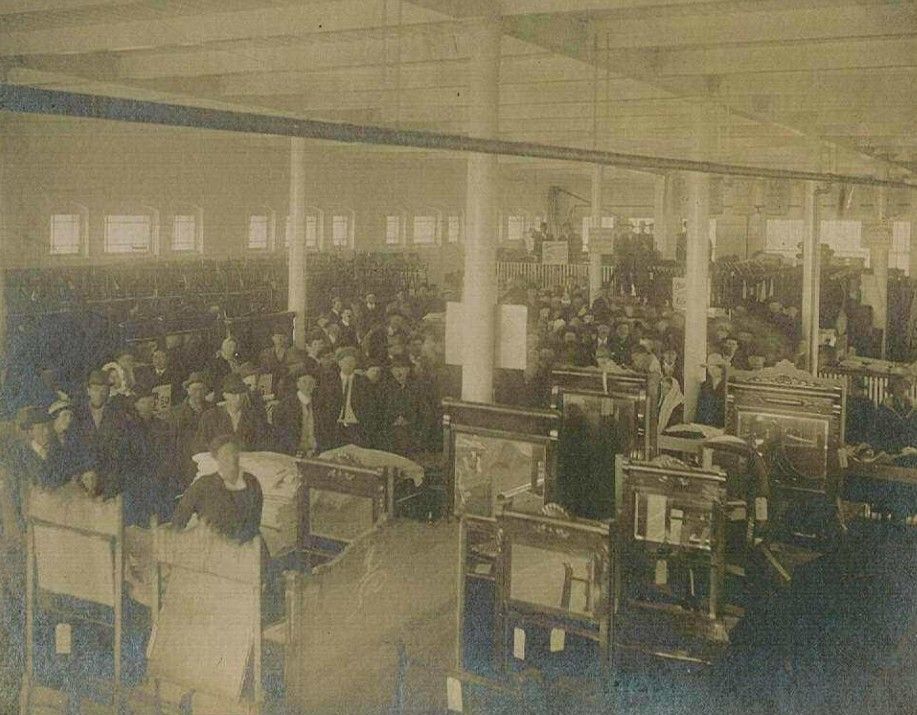
Right: Furniture Department at Jones Mercantile. Date unknown.


By any measure, Jones was a workaholic. He rose at 3 a.m. and opened the store at 4 a.m. Competitors criticized him for doing so, but Jones reasoned that people could arrive in town early and shop before work, even if they were just passing through, and save time. He also offered those early customers delivery by noon if they preferred. Three years in, Jones Mercantile was doing so well that he decided to stay and expand.
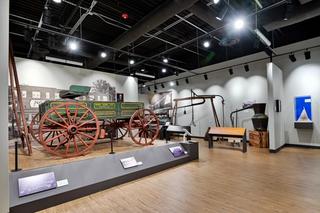
Left: A wagon used by Jones Mercantile is on exhibit at the Cherokee County History Center.
He was also deeply religious, teaching and supervising his church’s Sunday School, and working to instill his work ethic (which he viewed as Christian Duty) into the next generation. You can see firsthand a Bible given to R. T. Jones by one of his sons, if you visit the coworking space now inside the Jones Mercantile Building. It is filled with notations, and obviously well-used. His son Robert Permedus Jones recalled vividly his first day of school. His father walked him there that morning, quiet and thoughtful. Just before sending him in, he told his son, “Son, this is an important day in your life. You are changing from a boy to a man, and today you begin making your preparation for the obligations of life, and you begin to assume them. Go on in, and do your work well, then come to the store when school is out. ”When young Robert did as he was told, he was met by his father with a brand-new axe, brought to the woodpile, and so began “serving the family, the home, and society.”
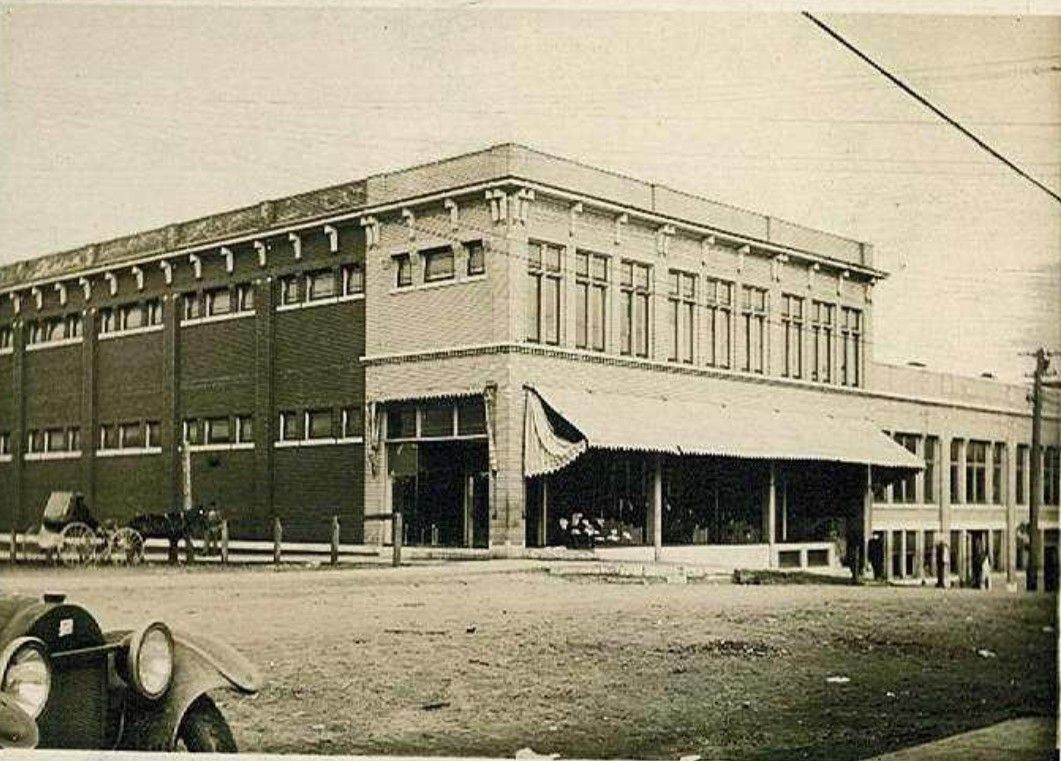
The original building was replaced completely in 1914 and expanded further in 1921. In time the Jones Mercantile Building would include some 60,000 square feet. Through the years many of R. T.’s children and even grandchildren would find themselves working at Jones Mercantile. The store played a significant role in the Jones household as well as the Canton community.
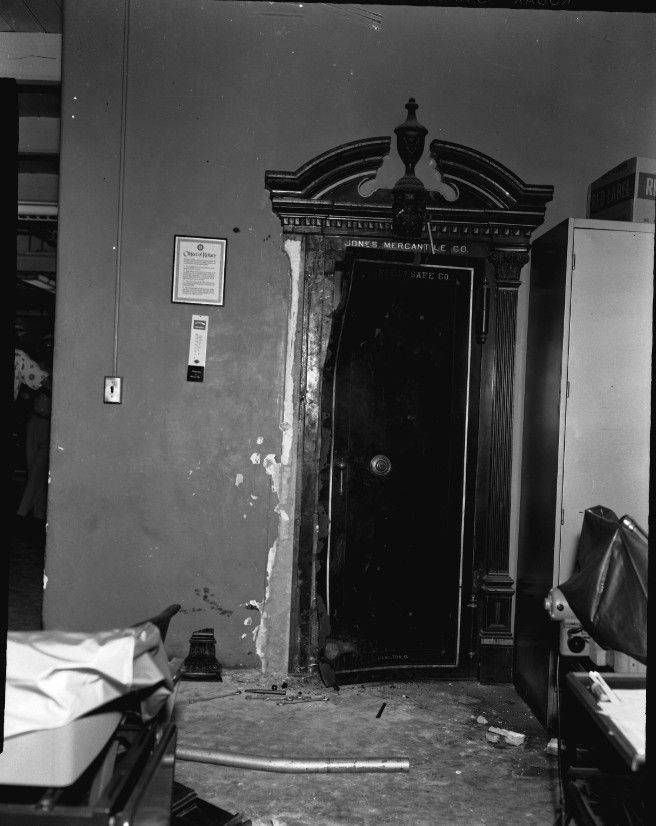
At one point he installed a large safe inside the Mercantile store; many, many years later in the 1970s, thieves would attempt to break into that safe overnight, unsuccessfully. If R. T. Jones had been alive, he’d probably have chided them more for leaving their work unfinished than for the attempted robbery.
Right: The safe was located on the mezzanine level of the building. The thieves were not able to get the safe open and were never caught. Had they been successful, they'd have been disappointed, as the safe contained no money at the time.


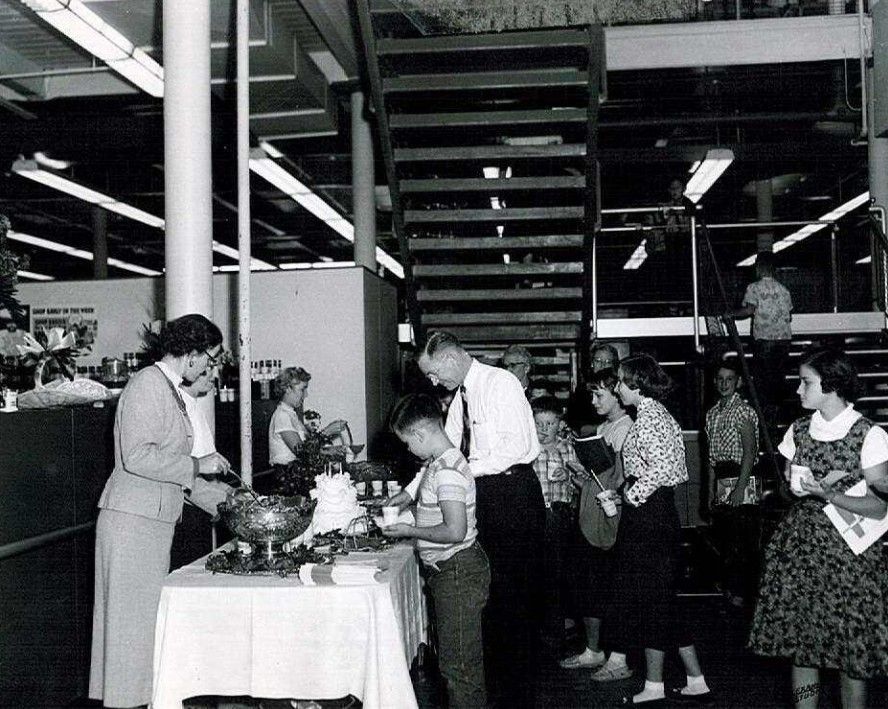
Another story about the Mercantile store that took place after R. T. Jones passing concerns the renowned architect John C. Portman. Portman would go on to build many famous buildings, including the AmericasMart in downtown Atlanta and Hyatt Regency Atlanta with its immense atrium and revolving rooftop restaurant, but just after he graduated from Georgia Institute of Technology, he designed a renovation of the Jones Mercantile that included a floating staircase. R. T. Jones’ son who managed the store and was as conservative as his father had been, expressed concern when he first saw it, fearing that ladies would strongly disapprove. It’s said that young Portman himself donned a skirt and walked up the staircase to demonstrate that ladies need have no concerns about “propriety,” and so the open staircase remained.
Left: In this picture from an Open House in the 1950s, the floating staircase is visible in the background.
The family would open satellite stores in other locations to better serve customers, but it is the original location that is remembered most fondly. Today the Jones Mercantile building houses restaurants and businesses, and along with the marble courthouse is still the most recognizable building on the city square.
For a less ambitious man, the successful Mercantile would have been enough, but Jones’ work ethic wouldn’t allow him to rest. He saw a city that was growing but also witnessed the struggle of farmers to make a decent living. Determined to give back to the community that had become his home, he had an idea for building a business that would improve their lot by providing a ready market for their key cash crop: cotton. But that is another story, for another day.