



“Payne-staking” Research
by Bruce Baker
A great many people, including myself, have faced the daunting task of trying to trace back and confirm Native American ancestry. Bluntly, our European ancestors had little interest in the history of these people. While I’ve been able to rely on all sorts of records of European ancestors in the States dating back to the early 1600s, records kept on Native Americans prior to the late 1800s are sketchy at best. And this isn’t just frustrating for individual researchers; History Cherokee receives multiple inquiries yearly from people researching their family history who know their native ancestors arrived in the Midwest via the Trail of Tears, and are hopeful we’ll have records, or can show them where to look. Unfortunately, the U.S. Government did not keep a systematic record of the 10,000+ displaced people, and we often cannot assist them.
As such, the confirmation of Native American ancestry if it dates back prior to the relocation of the Creeks, Choctaw, Chickasaw, and Cherokee in 1838 is at best problematic, and often all but impossible. But with new techniques available, progress is being made, and one amazing success story is the tale of a man born right here in Canton, Georgia, in 1754, named John Payne. A direct descendant named Shawn Potter did the painstaking work to prove the oral tradition of John’s maternal lineage. Potter has written a small book for members of his family documenting how he was able to confirm his family’s Native American ancestry based upon DNA.
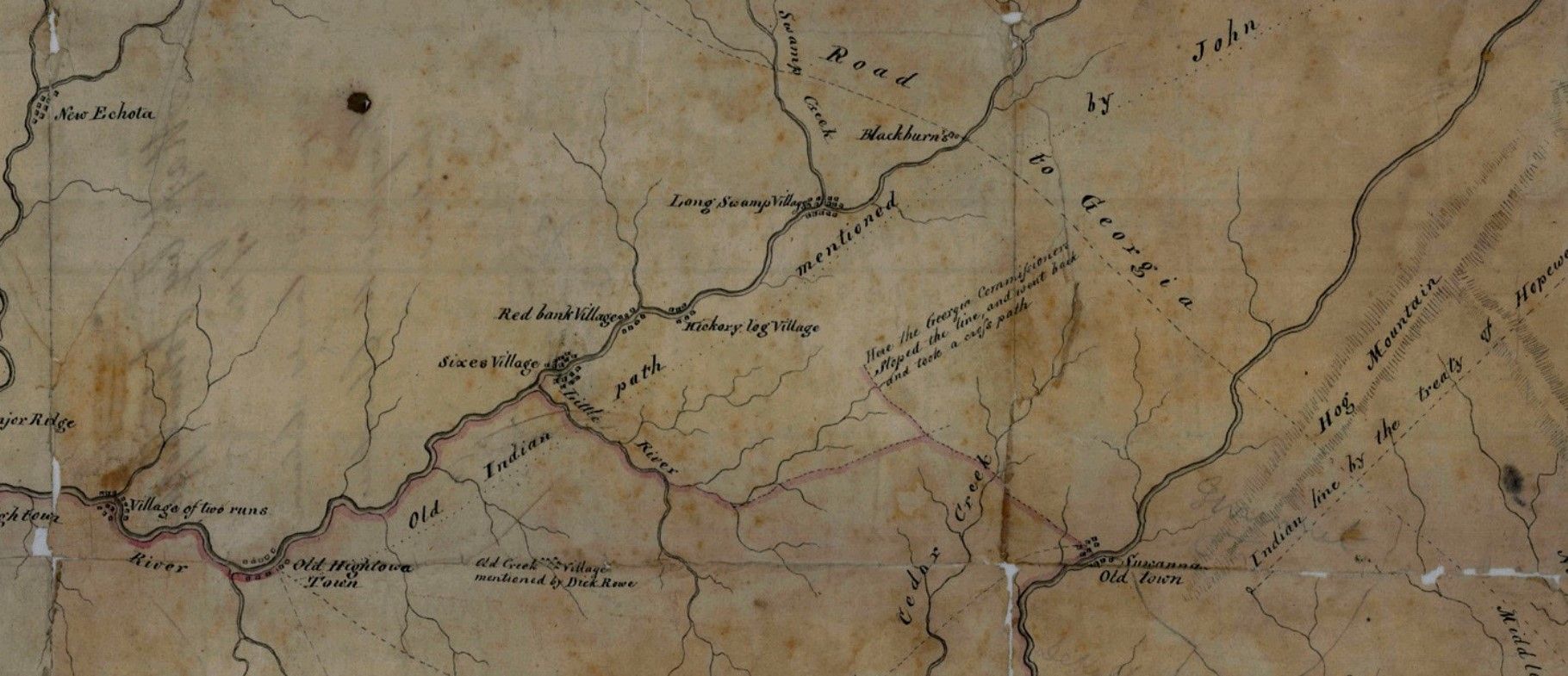
John Red Bank Payne was born near present-day Canton, Georgia, on January 24, 1754; he married Ann Henslee in Caswell County, North Carolina in 1779, and died in Carnesville, Franklin County, Georgia, on December 14, 1831. His father, Thomas Payne, was a Virginian, but travelled with his older brother William engaging in the deerskin trade throughout the mid-1700s. This would take them to North Georgia and beyond, up until Thomas’ death in 1811. Modern records indicate that Thomas was married twice; he fathered four children by his first wife, and nine by his second wife. Local North Georgia tradition identifies his first wife as a Cherokee woman. “Trader Payne” managed a trading post on Payne’s Creek, according to The History of Franklin County, Georgia, and the author states that “one of his descendants, an offspring of a Cherokee marriage, later married Moses Ayers whose descendants still live in the county.” Sure enough, it was one of John Red Bank Payne’s sisters that married Moses.

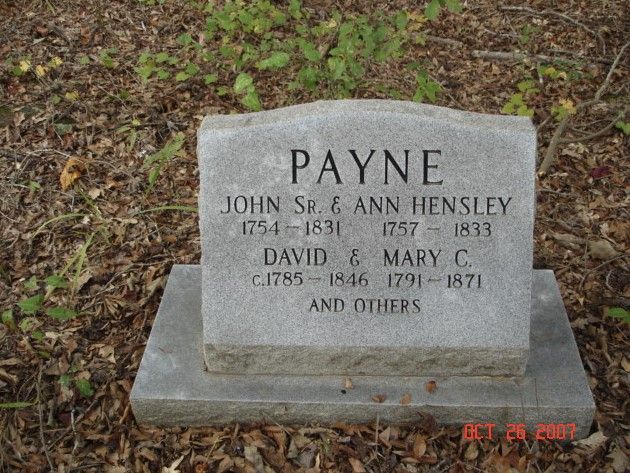
That, along with being given the middle name “Red Bank” (as recorded in the Family Bible), supported the belief that his mother was indeed a Cherokee. The Red Bank Cherokee were certainly in both Cherokee and neighboring Forsyth Counties, one branch of which did indeed have a small village called Red Bank believed by some to be in the area where Boling Park is today. Later, Colonial settlers followed their footpaths along the Etowah River to form what became known as “the Suttallee Trace.” "Red Bank" itself conforms perfectly with Cherokee naming customs but would be highly unusual as a given name by the English settlers of the time (the Paynes emigrated from County Kent, England).
It all fits, logically, but proof of course is lacking. No written record of his mother’s name or ancestry has been found. One can also posit that his father simply chose the middle name out of respect for his trading partners. There are no birth records here in Cherokee County in 1754, as that’s over 80 years before the County was even founded. So, there is no way to gain further support for the oral tradition. Or is there?
In his search for answers, Shawn Potter came across a series of articles online called “The Autosomal Me,” which in part shows how one can utilize small segments of Native American DNA to identify lineage and specific ancestors, using a technique called Minority Admixture Mapping, or MAP. Shawn wrote to the author, and after several exchanges with her about the technique, he began tracking down descendants of John Red Bank Payne and his sister, Nancy Payne.

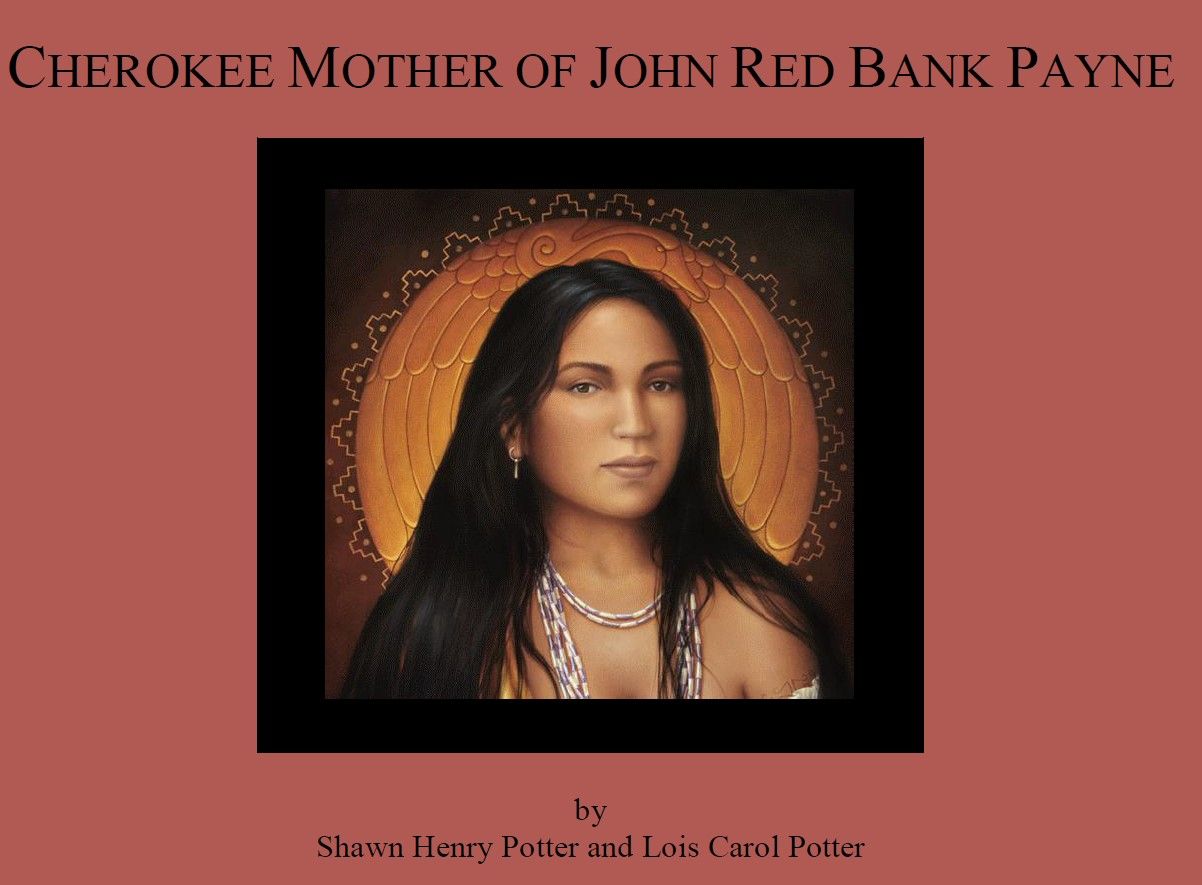
I’ll spare you all the technical details, but if you have an interest in knowing more, I’d encourage you to visit the Native Heritage Project website, or any of several others that have picked up the story. Autosomal comparisons of eight different descendants, from three different branches of John Red Bank Payne descendants have specific DNA segments in common that must have come from a common native ancestor. As John’s father’s English lineage is known, it must have come from his mother. Additionally, two descendants of John Red Bank Payne’s sister Nancy have been tested, both of which have the same matching Native American DNA.
The propensity of test results across multiple lines on the descendancy chart leaves little doubt that John Red Bank Payne’s mother was Native American. It can’t prove that she was a Cherokee, but as his father traded with the Cherokee, was reported to have had a wife who was Cherokee, and the name Red Bank refers both to a Cherokee tribe and a Cherokee village near where he was born, it’s hard to conceive of another likely explanation.
The tenacity of Shawn Potter’s efforts to uncover the ancestry behind John Red Bank Payne bring to mind a proverb from George Herbert’s 1640 collection of Proverbs entitled Jacula Prudentum: “To him that will, ways are not wanting.”
So, to my fellow genealogists, I say this: never give up.